
Infant and nursery care in Brisbane: what to look for in the baby room
By Mei Larsen · Updated 2026-08-03
This is general guidance on what to look for in infant care, not medical or developmental advice specific to your baby. Discuss any individual feeding, sleep or health needs directly with your GP or child health nurse.
Choosing care for a baby feels different from choosing care for an older toddler or preschooler, and it should. Infant rooms carry the tightest staffing requirements, the most individualised routines, and understandably the highest parental anxiety of any age group in nursery and infant care. Here’s what’s actually worth focusing on.
Ratios matter more here than anywhere else
Queensland’s ratio for children under two is one educator to four children, the tightest of any age band, and for good reason: babies need frequent, individual attention for feeding, sleeping, nappy changes and simple comfort throughout the day in a way older children don’t. Ask a centre to confirm the actual ratio operating in the specific room your baby would join, and how they manage ratio compliance during staff breaks or shift changeovers, a detail that’s easy to overlook but genuinely matters across a full day. These sit alongside a broader set of safety and supervision questions to ask before you enrol.
Individual routines, not group schedules
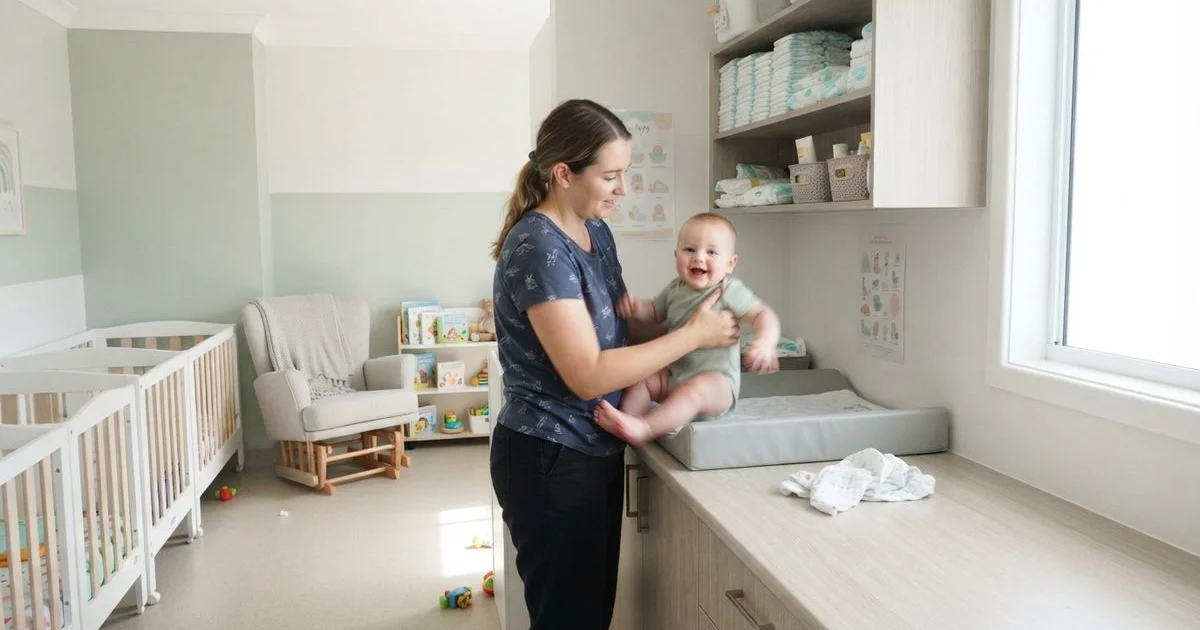
A strong nursery room works around each baby’s individual feeding and sleep routine as closely as possible, rather than running the whole room on one fixed schedule. Ask specifically how they track this day to day, many centres use a written or app-based log for feeds, naps, and nappy changes, and how consistently that information gets passed between educators across a shift change, so nothing gets lost if your regular educator isn’t there on a given day.
What to look for on a tour
| What to check | Why it matters |
|---|---|
| Actual ratio in the room, not just the legal minimum | Reveals real day-to-day staffing, including breaks and shift changes |
| How individual routines are tracked and communicated | Confirms your baby’s specific needs are actually being followed |
| Settling-in process for a new baby | A gradual, structured introduction eases both baby and parent anxiety |
| Sleep safety practices | Ask directly about safe sleep positioning and cot monitoring |
| Communication style during the day | Daily photo or app updates matter enormously for parents of very young babies |
Feeding and sleep specifics worth asking about
If you’re breastfeeding, ask how the centre supports expressed milk storage and feeding, and whether you’re welcome to visit and feed in person if that matters to you. Ask about their approach to introducing solids if your baby is at that stage, and how they’d handle a new food your family hasn’t tried yet. On sleep, ask specifically about safe sleep practices, positioning, monitoring, and how frequently sleeping babies are checked, since this is one of the most reassuring things a good nursery room can speak to with real specificity.
Managing the emotional side
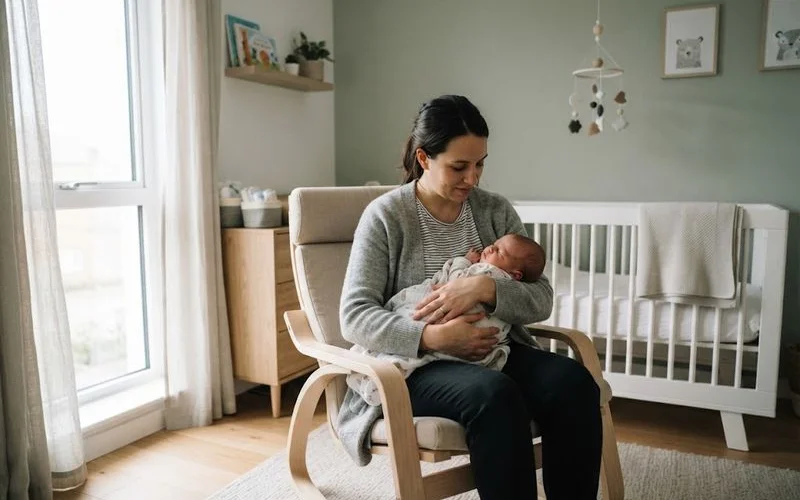
Leaving a very young baby in care for the first time is a genuinely big adjustment for most parents, regardless of how confident you feel about the centre itself. A good nursery room will actively support this, often through a short, gradual settling-in period before your baby’s official start, and frequent updates during the early weeks so you’re not left wondering how the day is going. If a centre brushes past this rather than describing a specific process, it’s worth asking more directly before you commit.
When your baby moves into the toddler room
Even before your baby starts, it’s worth asking how the centre handles the eventual move from the infant room into the toddler room, since this transition happens for every child and can be handled well or badly. Ask whether educators move with the children during that transition, whether there’s a gradual introduction period where your child visits the new room before the official switch, and how communication between the two rooms works to keep continuity in your child’s routine and preferences during the changeover.
Trusting your own observation
Policies and written processes matter, but so does simply watching how educators behave with the babies already in the room during your tour. Are they getting down to eye level, talking gently to infants during nappy changes and feeds, responding promptly to a crying baby rather than letting it go unattended for a stretch? These small, observable moments often tell you more about the actual day-to-day quality of care than any policy document, and they’re worth paying close attention to during your visit.
Compare rated Brisbane providers on the directory, scored using our methodology.
Questions people ask
- What age can babies start in a Brisbane childcare nursery room?
- Most centres accept babies from around six weeks old, though some set a slightly older minimum. Confirm a centre's specific intake age directly, since it varies between providers.
- What ratio should I expect in the youngest infant room?
- Queensland requires one educator for every four children under two years old, the tightest ratio of any age group, reflecting how much individual attention very young babies need.
- How do centres handle different feeding and sleep routines for each baby?
- Reputable nurseries follow each family's individual routine and preferences as closely as possible, rather than a fixed group schedule, and should be able to explain specifically how they track and communicate feeding, sleep and nappy changes throughout the day.
- Is it normal to feel anxious about leaving a very young baby in care?
- Very common, and reasonable. A good nursery room will actively support this transition with a gradual settling-in process and clear, frequent updates during the day, which tends to ease a lot of the initial anxiety once you see how attentively your baby is being cared for.